What Should I Do to Prepare My Home for Carpet Installation?
Are you ready to change your living space? Or are you missing out by not preparing for carpet installation? Getting ready for new carpet is more than picking a style. It's about doing many important tasks to make the installation go smoothly.
These tasks include clearing the area, measuring right, and making sure your floors are ready. Every step is important.
Spending time to get your home ready for carpet can make your flooring last longer. It also helps avoid problems during installation. With the average cost of carpet installation around $6.35 per square foot, being prepared can save you money and time. Are you ready to learn how to get your home ready? Let's explore the key steps you need to take.
Key Takeaways
- Clearing the installation area is critical for a seamless process.
- Measuring your space accurately can prevent costly mistakes.
- Inspecting your floors for damage ensures an optimal foundation for your new carpet.
- Choosing the right materials and installers can impact long-term satisfaction and cost-effectiveness.
- Many companies offer convenient services like free installation, aiding in overall budget management.
Understand the Carpet Installation Process
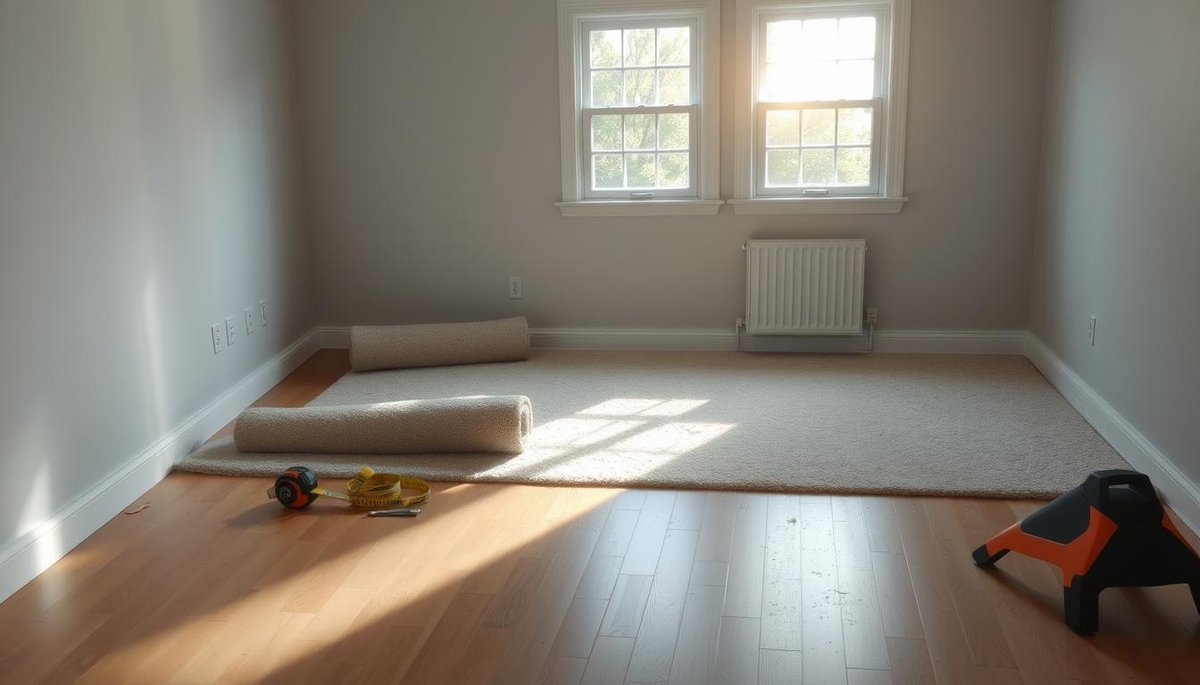
Learning about the carpet installation process helps you prepare better. It involves several steps, like measuring your space and picking the right materials. Knowing these steps makes the project go smoothly and ensures success.
Overview of Carpet Installation
Carpet installation needs a careful plan. Start by measuring your room and checking the current floor. Then, choose the best carpet and padding for comfort and durability.
The next steps are laying tack strips, installing the carpet, and making sure it's secure. This makes your floor smooth and strong. It's great for places like bedrooms and living rooms that need warmth.
Key Stages in the Process
Carpet installation has several important stages. First, you plan by measuring and picking materials, leaving room for extra. Then, you remove the old floor to prepare the subfloor.
Preparing the subfloor is key for the carpet's life and performance. The last step is laying the carpet carefully. Using the right tools helps stretch it well. Mastering these steps ensures your new floor looks perfect and lasts longer.

Clear and Prepare the Area
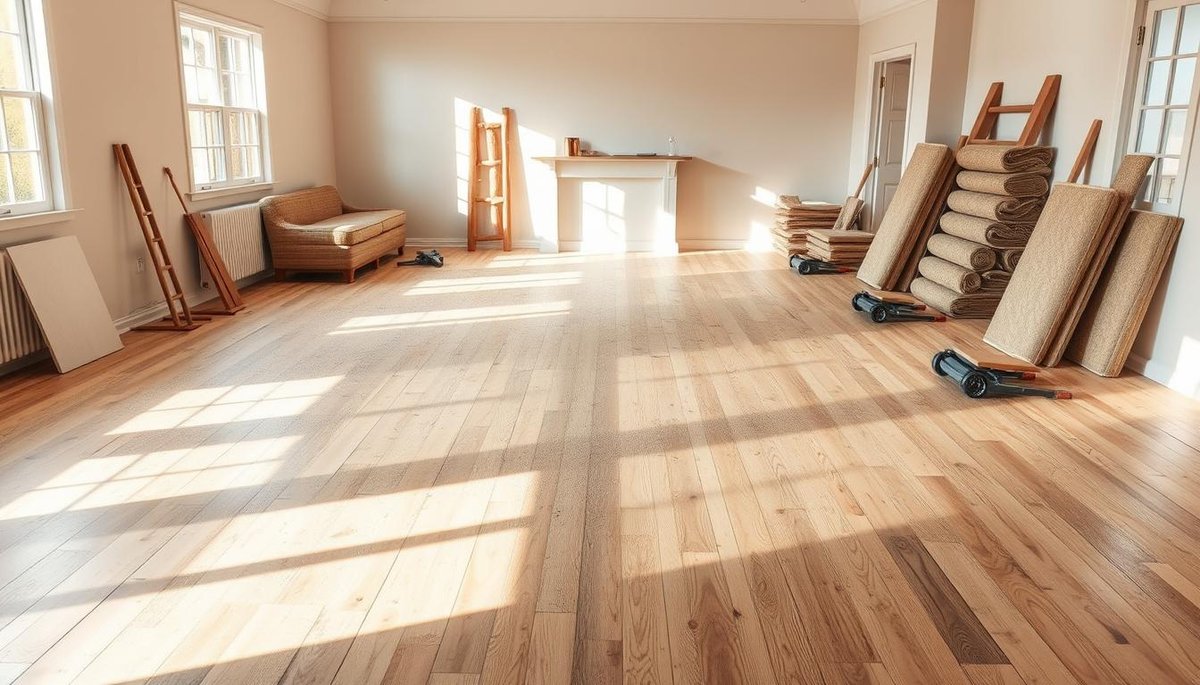
Getting your home ready for carpet install is a big step. First, make sure the area is clear for the carpet. This makes the installation go smoothly. It's important to have enough time to clear the space to avoid delays.
Remove Furniture
Removing furniture is key to a clear area for carpet install. It lets installers move around easily and work well. Plan to spend 2-3 hours on this, more for big rooms with lots of heavy items.
Take Down Wall Hangings
Take down wall hangings like pictures or shelves. This keeps them safe and lets installers work without trouble. A clean space also helps the adhesives dry faster, making the job better.
Clear Flooring Obstacles
Remove any flooring obstacles, like old carpets or rugs. These can make the job harder and lead to problems. Preparing well helps avoid issues and ensures the carpet sticks well and looks good.
Assess the Condition of Your Floors
Getting ready for carpet installation means checking your floors carefully. It's key to see if there are any problems that could mess up the new carpet. Spotting damage early can save trouble later.
Check for Damage
Look for cracks, warping, or other oddities in your floors. Damage can make the carpet less stable and less comfy. Fixing these problems early helps your new carpet last longer.
Clean the Subfloor
A clean subfloor is vital for a good install. It stops dirt or dust from messing with the carpet's stickiness. Keeping the subfloor clean makes the install easier. Cleaning it well is a smart step in getting ready.
Consider Repairs
If you find damage, think about fixing it. Getting experts to fix the subfloor is a good idea. Fixing it before you install the carpet can avoid problems later.
Measure Your Space Accurately
Choosing the right carpet for your home begins with accurate measurements. It's not just about the square footage. You need to pay attention to every detail for a perfect fit. This ensures you don't waste money or material.
If you're not sure how to measure, consider getting help from professionals. They can help you get the exact dimensions of your space.
Utilize Professional Help
Measuring your space might seem simple, but professionals can make a big difference. They spot issues you might miss. Many carpet stores offer this service for free, so take advantage of it.
This is very helpful in complex spaces. For example, rooms with alcoves or unique shapes.
Tools for Measuring
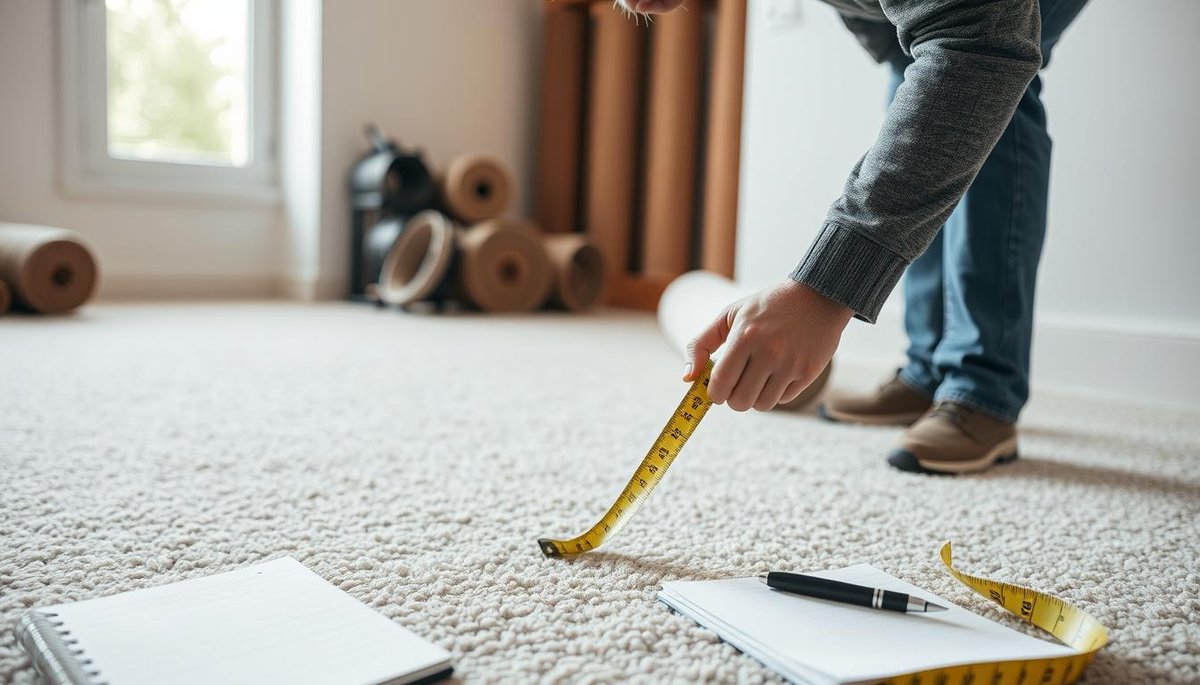
Using the right tools makes measuring easier and more accurate. A measuring tape is a must-have. It helps you get the right dimensions.
When measuring, add about 10% to your total area. For example, a 12 by 12 foot room needs 158.4 square feet of carpet. This ensures you have enough.
Small details, like measuring to the center of doorways, can also help. This careful approach ensures you have enough carpet and improves the look of your installation.
Subfloor Considerations
Before picking carpet, knowing your subfloor is key. Different subfloors like plywood, concrete, and particleboard need different prep. Checking the subfloor's condition helps decide the prep steps for carpet installation.
Types of Subflooring
Plywood subfloors are strong and common in homes. It's important to check them for damage or rot. This ensures the flooring above stays stable.
Concrete subfloors are sturdy but might need sealing or leveling for carpet. Particleboard is less ideal because it can sag and deteriorate. It needs a solid base for new flooring.
Preparing Different Subfloor Types
Cleaning the subfloor is the first step in carpet prep. Dirt and debris can harm adhesion and shorten the flooring's life by up to 25%. Look for any signs of damage on the subfloor.
Check for unevenness with a straightedge or spirit level. Fixing small issues with leveling compounds can make a big difference.
For concrete subfloors, check moisture levels with a moisture meter. High moisture can cause warping or mold. Ideal levels are 6% to 12%, depending on the flooring. A clean and level surface reduces maintenance by 30% and makes the carpet last longer.

Choose the Right Carpet
Choosing the right carpet is key for comfort and style in your home. Many factors affect your choice, like fiber type, color, and texture. These should match your family's lifestyle and taste, ensuring the perfect carpet for your space.
Selecting the Right Fiber
Think about both function and looks when picking carpet fiber. Nylon is great for busy areas because it's tough. Polyester is better for bedrooms, as it's softer. Olefin works well in basements, handling moisture well.
Wool is a luxury option, but it's less common. Each fiber has its own benefits. So, picking the right one is important for your home's needs.
Understanding Carpet Padding
Choosing the right carpet padding is also critical for comfort and carpet life. A denser pad can make your carpet more stain-resistant and better at sound absorption. This is good for home theaters.
Quality carpet padding, combined with the right fiber, leads to a durable and performing carpet.
Make Accessibility Easy for Installers
Planning carefully is key to a smooth carpet installation. It's important to prepare entry points well. A clear path helps the installers work faster and safer.
Start by picking specific entry points. This way, installers can move around easily and avoid getting distracted.
Designate Entry Points
Well-defined entry points make moving materials and tools easier. This can save a lot of time, which is great during the busy winter months. It also keeps the work area organized.
Ensure Space for Equipment
Having enough space for equipment is also vital. Make sure there's room for tools and materials. Installers use big machines like power stretchers for the best results.
Clearing the area helps the team work better and prevents damage to your home. For more tips on keeping the installation clean, check out our website.

Prepare for Noise and Dust
When getting new carpet, it's key to think about the noise and dust. This helps keep your home comfy. By knowing how these factors affect your space, you can make it nicer. Using noise-reducing methods and keeping air clean are both important.
Arrange for Noise Reduction
To cut down on noise, try closing windows and using sound barriers. These steps can lessen the noise from the installation. This way, your family can go about their day without too much disturbance.
Protecting Air Quality
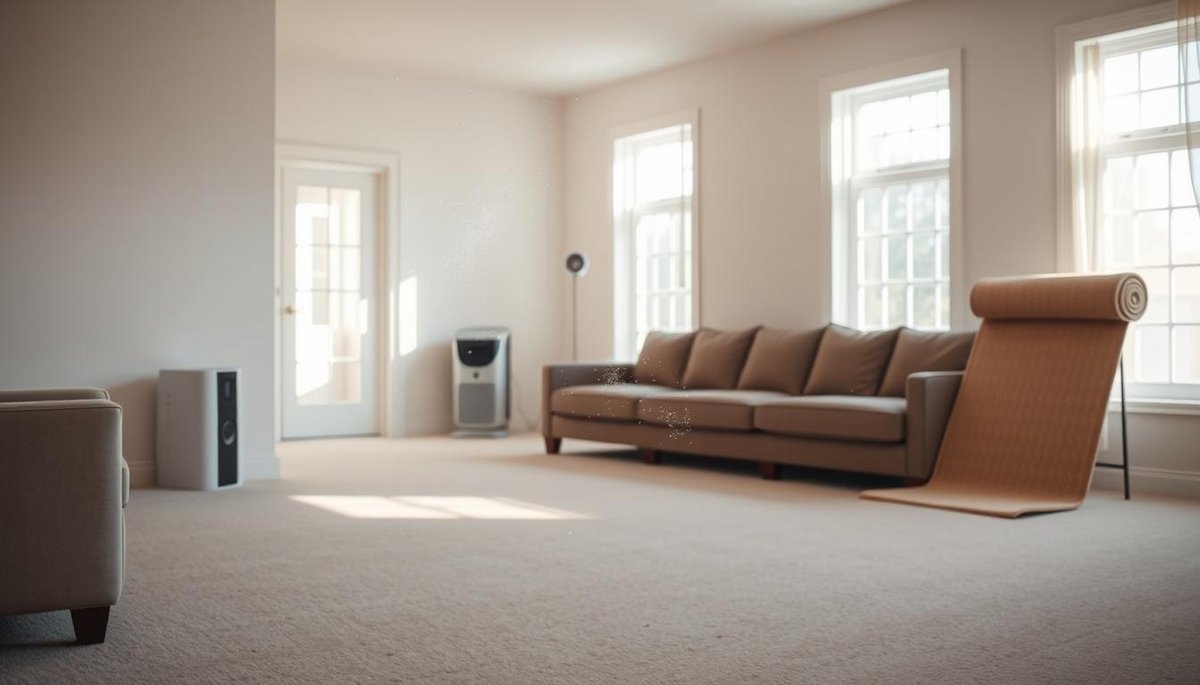
Keeping your air clean during carpet installation is critical. Use good ventilation, like open windows and air purifiers, to control dust. Dust can stay in the air for weeks after installation.
Using dust protection boards or plastic sheeting helps. It keeps dust down and lets air move freely.
Arrange for Removal of Old Carpet
Getting rid of old carpet is key before installing new one. It makes the transition smoother and prepares the space. Talk to American Flooring to learn about your removal options. They can help you figure out the cost and the best way to do it.
Discuss Removal Options with American Flooring
Reaching out to American Flooring opens up different ways to get rid of your carpet. Knowing if you should hire someone or do it yourself can save money. Most homes need a 10-yard dumpster for carpet removal, showing the size of the job.
Wearing safety gear like N95 masks and safety glasses is important. This is because of the dust and debris you'll face during the process.
Disposal Responsibilities
Knowing what to do with your carpet helps follow local rules. Some places charge $20 to $50 to dispose of carpet at the tip. Eco-friendly carpet recycling is another good choice, keeping up to 90% of carpet out of landfills.
Donating clean carpets to animal shelters is also a great idea. They use them for bedding. Proper disposal helps the environment and avoids fines of up to $1,000.
Confirm Installation Date and Time
Setting up a clear schedule is key for a smooth carpet installation. Confirming your carpet installation date with American Flooring helps avoid surprises. Being proactive in communication is very important.
Communicate with American Flooring
Talking openly with American Flooring helps you know their schedule. Discuss your preferred time and any special needs. This teamwork makes the installation process smoother.
Confirm Appointments
After making plans, confirm the appointment details. This avoids any confusion. Setting reminders helps keep everyone on track. It's vital for a smooth installation day.

Final Checklist Before Installation
As your carpet installation day gets closer, a detailed checklist is essential. Make sure to remove all personal items and furniture from the area. Also, double-check your measurements and the subfloor's condition. These steps can prevent delays and ensure you're happy with the final result.
Last-Minute Preparation Tips
Allow 48-72 hours for the flooring to acclimate to the room's temperature and humidity. Also, ensure your workspace is clear. This can save 25-30 minutes during the installation.
Contact Information for American Flooring
Keep American Flooring's contact info ready for any last-minute questions. You can call their Okemos location at (517) 349-4300. Good communication is vital for a smooth installation. For tips on keeping your carpet clean, visit maintaining carpet cleanliness on our website.
FAQ
First, clear the area of furniture and personal items. Remove old carpeting or flooring. Check your subfloor for damages and measure accurately to order the right amount of carpet. Talk to your flooring provider about removing old carpet.
Take out all furniture and wall hangings from the rooms. This makes the installation smoother and protects your belongings.
Checking your floors is key to find any damages before installing new carpet. This ensures a good fit and long-lasting carpet.
Use professional tools like a measuring tape or laser distance measurer. Getting exact measurements is important to avoid ordering too much or too little carpet.
Subfloor types like plywood or concrete need different preparations. Concrete might need sealing, and wooden subfloors might need reinforcement. Knowing your subfloor type helps avoid installation problems.
Consider the carpet's fiber type, color, and texture for your lifestyle. Also, picking the right padding is key for comfort and durability.
Make sure there are clear entry points for installers and enough space for their equipment. This makes the installation smoother and avoids delays.
Close windows and use sound barriers to reduce disruption. Make sure there's good ventilation and consider air purification systems to keep the air clean during installation.
Talk to your flooring provider, like American Flooring, about removing the old carpet. Discuss who will do it and any costs involved.
Confirm the installation date and time with your provider. Set reminders and keep in touch to avoid scheduling problems.
Make a checklist to check if everything is ready. Confirm measurements and make sure the area is clear. Keep your provider's contact info handy for any last-minute questions.